
How to Choose Paint Colors for Your Home Remodel
Flooring, cabinets, countertops and even light bulbs come before paint. See the 7 decisions in order, the LRV to look for by window direction (60+ for north-facing rooms), how to handle hot west-facing Texas light, how to test 8x8-inch samples and which sheen goes in every room.

In this article
- 1Choose fixed finishes first and paint last
- 2Read the light in every room before picking a color
- 3What LRV to look for in a paint color
- 4Pick your light bulbs before your paint
- 5Match undertones to your floors and countertops
- 6How to test paint samples at home
- 7Which paint sheen goes in which room
- 8Use the 60-30-10 rule to balance a palette
- 9Make colors flow through an open floor plan
- 102026 colors of the year worth using in a remodel
- 11What interior painting costs in Dallas
The paint chip that looked perfect at the store turns peach at 5 p.m. in a west-facing family room in Flower Mound. That moment is why I never let clients pick paint first. Paint colors for a remodel are chosen last, after flooring, cabinets, countertops and light bulbs, because those finishes have few options and cost real money to change, while each major paint brand sells thousands of colors. Three numbers decide whether a wall color works in a Dallas–Fort Worth home: the paint's LRV, the bulb's Kelvin rating and the direction the windows face.
How do you choose paint colors for a home remodel? Work from fixed to flexible: flooring, cabinets, countertops and tile first, then bulbs (2700K to 3000K for living areas), then paint. Pull the wall color from the undertone of those finishes and match its LRV to the room's light, about 60 or higher for north-facing rooms.
Light Reflectance Value (LRV) is the 0 to 100 number printed on a paint chip that tells you how much light a color bounces back into the room.
Choose fixed finishes first and paint last
A home remodel involves 7 color decisions in this order: layout and appliances, flooring, cabinets, countertops and tile, bulbs, paint, and finally textiles. The logic is the number of options: a few dozen floors or stone slabs fit your budget, while every paint brand offers thousands of colors.
Choosing is not the same as installing. Your contractor may paint before the cabinets go in, or lay hardwood last to protect it. What matters is that you never buy paint before you have the real flooring sample and the countertop slab in hand.
Read the light in every room before picking a color
Window direction changes paint color more than anything else. North-facing rooms get cool, soft light all day; south-facing rooms get warm, steady light; east-facing rooms are warm in the morning, and west-facing rooms are cool in the morning and hot, golden and intense in the afternoon.
West-facing rooms are the ones that surprise Texas homeowners most. That strong late-day sun exaggerates yellows and pinks, so a creamy white that looked perfect in the store can read peach by late afternoon. I balance it with whites and greige that lean slightly cool, and test the sample between 4 and 6 p.m. before deciding.
What LRV to look for in a paint color
LRV, or Light Reflectance Value, measures the share of light a color reflects, from 0 for pure black to 100 for pure white. A color with an LRV of 40 reflects 40% of the light that hits it and absorbs the rest, which is why it darkens a room with little daylight.
My working rule: in a north-facing room or a room with one window, I look for 60 or above. In a sun-filled living room I can drop to about 45 without the space feeling dark. LRV never replaces testing on the wall, but it rules out in one minute the colors that were never going to work.
Pick your light bulbs before your paint
Light bulbs change wall color as much as daylight does. A 2700K bulb gives yellowish light that warms beiges and creams and dulls grays and blues, while a 5000K bulb gives bluish-white light that cools everything. US bulb boxes use these names:
| Label on the box | Kelvin | Effect on paint | Where I use it |
|---|---|---|---|
| Soft White | 2700K | Warms creams and beiges, dulls grays and blues | Bedrooms and living rooms |
| Warm White | 3000K | Warm but cleaner | Living, dining and hallways |
| Neutral White | 3500K | Balanced, no tint | Kitchens and bathrooms |
| Cool White | 4000K | White, brings out grays and blues | Laundry and garage |
| Daylight | 5000K | Bluish white, can feel cold | Work areas |
If you judge a sample under construction lights or the old bulbs, you are judging a color you will never actually see.
Match undertones to your floors and countertops
An undertone is the hidden color mixed into a paint, and it is why a beige can look pink, green or gray on your wall. Warm undertones lean yellow, pink or peach; cool undertones lean blue, green or violet. Two whites with the same LRV can look completely different because of it.
In a remodel, the paint's undertone has to point the same direction as the flooring and countertop. Warm oak floors next to a blue-based gray almost always look like they are fighting. To check, lay the paint chip directly on the flooring sample and the stone, by a window, in daylight.
How to test paint samples at home
A 2x3-inch paper chip is for ruling colors out, not for choosing. To choose, you need samples of at least 8x8 inches on two different walls, viewed over one or two days.
- Narrow it to 2 or 3 candidates. If you are torn between ten, the issue is undertone, not color.
- Go big. Sherwin-Williams peel-and-stick samples measure 8x8 inches and cost $3.95 each, and one 8 oz Benjamin Moore sample jar covers about 2x2 feet at two coats.
- Use two walls, one beside the window and one in the darkest corner.
- Leave a white border so the old wall color does not skew what you see.
- Check morning, afternoon and night, with your final bulbs on.
Which paint sheen goes in which room
Paint sheen controls how easily a wall cleans and how much it shows flaws. There are 6 common levels, from flat to high gloss, and brands do not fully agree on kitchens and bathrooms: Sherwin-Williams recommends semi-gloss there, while Benjamin Moore makes matte finishes rated for bathrooms.
| Room | Sheen I use | Why |
|---|---|---|
| Ceilings | Flat | Hides flaws and does not reflect glare |
| Adult bedrooms | Flat or matte | Low traffic, soft look |
| Living and dining rooms | Matte or eggshell | Rich color with some washability |
| Hallways, kids' rooms, family rooms | Eggshell or satin | Handles scuffs and frequent cleaning |
| Kitchens and bathrooms | Satin or semi-gloss | Moisture and grease wipe off |
| Trim, doors and cabinets | Semi-gloss | Takes knocks and constant handling |
My call in bathrooms depends on ventilation: a windowless bathroom with a daily shower gets semi-gloss; one with a strong exhaust fan gets satin.
Use the 60-30-10 rule to balance a palette
The 60-30-10 rule splits a room's colors into three shares: 60% for the dominant color on walls and large pieces, 30% for the secondary color on furniture, cabinets or drapery, and 10% for accents like pillows, art and metal finishes. It is a guideline, not a law, but it keeps a space from feeling overloaded.
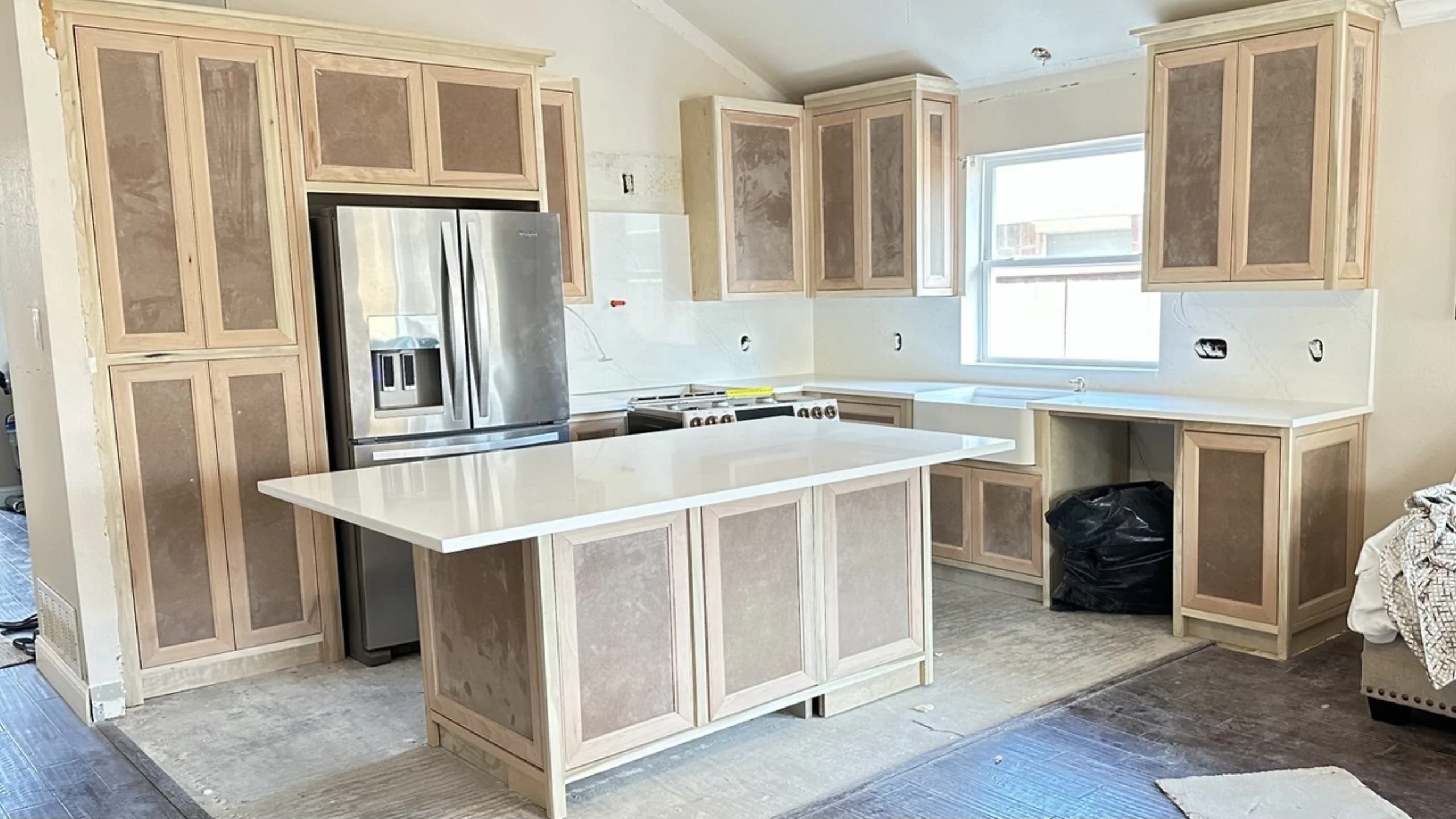
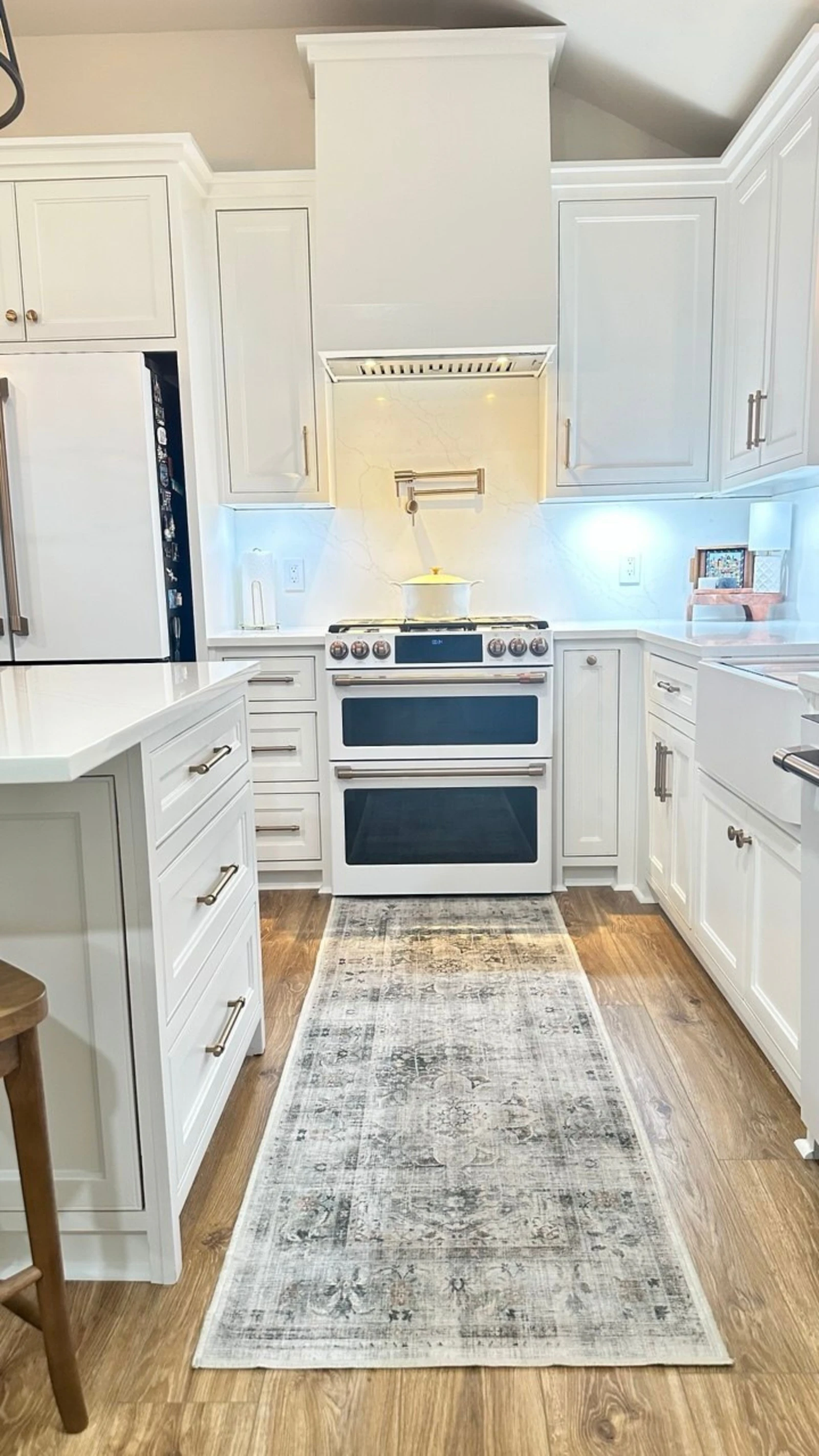
In a kitchen remodel, the 60 is usually the walls and upper cabinets, the 30 the island or lower cabinets, and the 10 the hardware, faucet and light fixtures. Choose white cabinets and a light quartz counter and most of that 60 is settled before you open a can of paint.
Make colors flow through an open floor plan
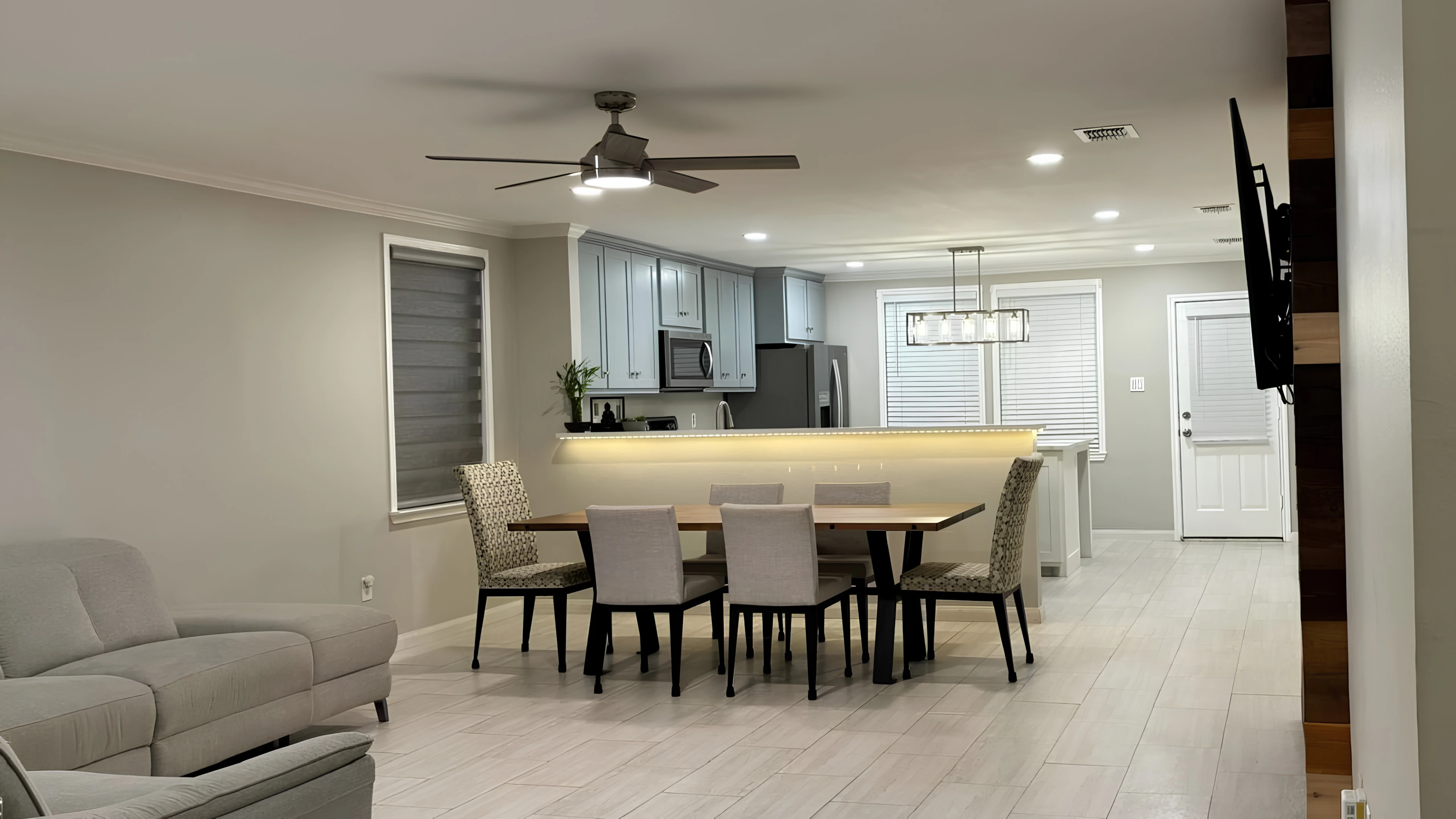
In an open floor plan, the living room, dining area and kitchen are seen together, so they behave like one room. The approach that works best for me is one undertone across all of them with only the depth changing, using 2 or 3 shades from the same paint strip.
Bedrooms and bathrooms with doors can change color without breaking the house. To tie everything together, I repeat one material or metal from space to space: the same wood floor throughout, the same brass or black on hardware and light fixtures. If you want a fresh look without painting or shopping, start with how to refresh your living room without buying anything.
2026 colors of the year worth using in a remodel
The 2026 colors of the year from the major paint brands are all warm and earthy: Sherwin-Williams Universal Khaki (SW 6150), Benjamin Moore Silhouette (AF-655), Behr Hidden Gem (N430-6A) and Valspar Warm Eucalyptus. Together they confirm what I see in Dallas homes: cool grays are giving way to beige, greige and soft greens.
For a remodel meant to last ten years, I use a color of the year as an accent or in one room, not across the whole house. Universal Khaki, with its LRV of 40, is beautiful in a well-lit study or dining room, but it will darken a north-facing hallway.
What interior painting costs in Dallas
In 2023, painting an average room in Dallas cost about $643, or roughly $3.45 per square foot with labor and materials included, and a whole house ran about $5,729 to $7,361. Tall ceilings, drywall repairs and trim push the price up, so get two or three quotes before you commit.
Getting the color right before the painter arrives is the cheapest savings in the whole project: repainting a room because the color missed costs as much as painting it the first time.
If you are planning a remodel and want to make these calls with confidence, I can walk you through every room with my remodeling design guidance, or we can start with an in-home initial visit in Flower Mound and across the Dallas–Fort Worth area.
Frequently asked questions
What should I choose first when remodeling, paint or flooring?
Flooring, cabinets and countertops come first, because there are only a handful of options that fit your budget and they are expensive to change. Paint comes last: Sherwin-Williams, Benjamin Moore and Behr each sell thousands of colors, so you can always match the undertone of the finishes you already chose.
What LRV is best for a north-facing room?
Look for an LRV of roughly 60 or higher. LRV, or Light Reflectance Value, runs from 0 for black to 100 for white, and north light is cool and soft, so a warm color that reflects more light keeps the room from looking gray. The LRV is printed on the back of most paint chips.
How big should paint samples be, and how long should I test them?
Use samples of at least 8x8 inches, or a 2x2-foot painted patch, which is about what one 8 oz Benjamin Moore sample jar covers at two coats. Put them on two walls, one by the window and one in shadow, and check them morning, afternoon and night for one to two days.
Do light bulbs change paint color?
Yes. A 2700K Soft White bulb makes walls look warmer and can muddy cool grays and blues, while 4000K Cool White and 5000K Daylight bulbs look whiter and bluer. Install your final bulbs before you judge any sample, because the color under construction lights is not the color you will live with.
What paint finish is best for kitchens and bathrooms?
Satin or semi-gloss, because both wipe clean and handle moisture. Sherwin-Williams recommends semi-gloss for kitchens and bathrooms; in a bathroom with a strong exhaust fan, satin looks softer. Keep flat for ceilings, matte or eggshell for living areas, and semi-gloss for trim, doors and cabinets.
Should I paint my whole house the same color?
Not necessarily. In an open floor plan, keep one undertone across the rooms you can see together and vary the depth, using 2 or 3 shades from the same paint strip. Closed rooms such as bedrooms and bathrooms can take a different color without breaking the flow of the house.
How much does it cost to paint a room in Dallas?
In 2023, painting an average room in Dallas cost about $643, or roughly $3.45 per square foot with labor and materials included, and a whole house ran about $5,729 to $7,361. Tall ceilings, drywall repairs and trim raise the price, so get two or three quotes.
Keep reading

Interior decorator in Flower Mound, Texas. I help families across the Dallas–Fort Worth area create homes that feel beautiful, organized and calm.